

What Are Red Flags on a Resume
When you apply for a job, your resume is the main highlight. That’s the first thing an employer notices, even more so when they meet the candidate in person. Before having an interaction or any call with the candidate, they build an impression about them. That image they create is based on the one document they created.
The hard reality is that most recruiters don’t spend much time reviewing each document. Instead, they just scan a few and make their decision. Even that scan is brief, usually around seven seconds.
In those few seconds, your mistakes can be highlighted. And not in a good way. These issues are called red flags.
A few resume common mistakes don’t mean you’re unqualified for the job or you’re incapable of handling the position.
In this blog, you will learn all about resume red flags, how to overcome them, tips and tricks, and examples that will help you improve your document impressively. Explore top mistakes, what to avoid in a resume, and much more.
What Is a Red Flag on a Resume?
Anything that raises concern on your resume is a red flag. If any recruiter or person is reading your CV and is doubtful about the candidate’s expertise, this is considered the biggest resume mistake.
It could be something obvious like spelling errors or something less noticeable like employment gaps in your career. No matter what, it affects how your resume is perceived.
Remember that employers aren’t just looking at your skills, but they are trying to understand more about you. Like how reliable and honest you are. If your resume feels inconsistent, it can impact their decision, and your document may fall into the ‘rejected’ pile. A professional resume writer in Canada can handle it and turn your mistakes into your strength.
Some red flags are serious, like dishonesty. You have mentioned that you’re currently employed, but in reality, you’re not. That’s a big level of dishonesty, so a major red flag.
On the contrary, poor formatting and vague terms are some small mistakes. However, they are important enough that you cannot ignore them.
Why Do Resume Red Flags Matter?
People assume that small mistakes aren’t that serious. The recruiters only look for the experience and skills and not the mistakes. They believe that it is impossible for the recruiter to consider your mistakes in the brief seven seconds.
However, they don’t understand that recruiters have got the eyes of an eagle. They look out for mistakes, even if they are small. When they review an application, that small mistake becomes much more noticeable.
Recruiters have no extra time since they are surrounded by hundreds of applications. With that extensive pool, they won’t have time to figure out what you mean or try to communicate. If it feels confusing or difficult to read, they simply move on. This is exactly why many job seekers turn to resume and cover letter services to make sure their application is clear, relevant, and free from avoidable mistakes.
Know that red flags on a resume can:
- Make you seem careless
- Create doubts about your experience
- Raise questions about your reliability
- Reduce your chances of getting shortlisted
Even if you have strong qualifications, these mistakes might take you to rejection.
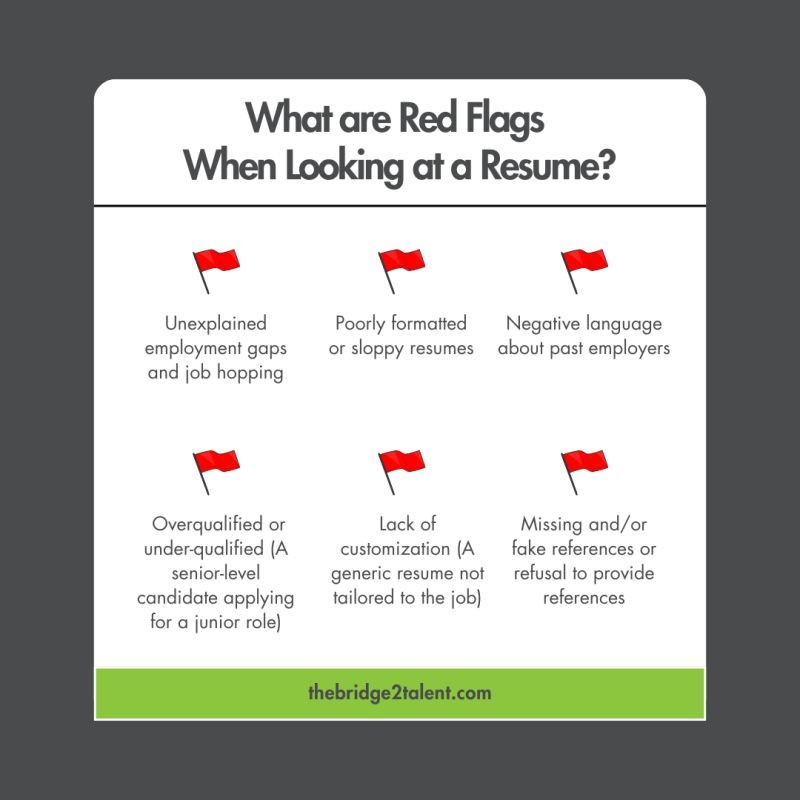
Common Resume Red Flags (And What They Mean)
While there are many red flags recruiters find in a resume, some happen more frequently. When you’re aware of them, you can avoid them. So here are some of the mistakes that are most commonly found in a curriculum vitae:
Employment Gaps Without Explanation
Gaps in your career history are fairly common. Many people take a break for important reasons. Some like to go for further studies; some have personal responsibilities. Many women take an extensive break when they start their motherhood journey.
Taking a break isn’t the issue. If you leave it unexplained, that’s the main problem.
If a recruiter finds a period with no employment history, they will start guessing. Those guesses created unnecessary doubts. Moreover, you will also come across negative in that scenario due to common resume mistakes.
But if you add a simple explanation, you can make a big difference. You don’t have to stretch it too much. Just a simple and straightforward explanation of what you were doing at that time is more than enough.
Frequent Job Changes
Job switching is also normal. Candidates actually do that pretty often due to many reasons like location change, opportunities, etc. People change jobs usually in the early stages of their careers. That part is quite common. But if a recruiter finds multiple stays in companies, it may raise concerns.
The employer will be more doubtful about you. They will wonder whether you will stay longer in their company or not. They ignore that there may be a reason but assume that you’re not serious about your work.
But if you add some valid reasons in the cover letter or the email, it can make a big difference. You can include reasons like contract roles or company closures instead of layoffs.
When you add a context, even the negative points are seen positively.
Generic Resume for Every Job
Using the same old resume for every job is a mistake made by many. When you submit a generic CV, you are confusing the recruiter if you’re a good fit for the position or not. Since your document isn’t focused, you will lose your chance to impress the employer.
Many employers can tell if the resume has been tailored to the position. A generic CV doesn’t have the niche-relevant keywords, while the customized one has quite a few.
When you make the slightest changes like adjusting your career summary or highlighting your most relevant experience, you make a big difference. By doing this, you are showing your efforts in getting that position. Also, your application will become more relevant and desirable.
Spelling and Grammar Mistakes
Without any doubt, it’s one of the most common red flags that can be found in the CV. Although people know about this issue, their documents still have some faults. That’s because things get overlooked in the making.
Know that errors in spelling or grammar can damage your reputation. You will be considered careless, even if you have a page full of experience. It will show that you didn’t take the time to review your work.
This becomes an even bigger problem for positions that need attention to detail. So, take a few extra minutes to proofread your resume. This way, you can ensure your content is up to the mark.
Too Much or Irrelevant Information
Recruiters love to read a resume that is relevant and focused. When you add too much information, you make it confusing. It naturally becomes harder to understand. Employers may think you’re good at many things but master none.
So, avoid using information like the following:
- Irrelevant job experience
- Outdated skills
- Personal details that are not needed
When your CV is packed with stuff that doesn’t matter, they won’t know your expertise. So, try to keep it concise and relevant to come across as a stronger candidate.
Unclear Job Roles or Responsibilities
Listing job titles without explaining the role you played is pretty useless. This creates a gap, and your image may get sabotaged.
Employers want to know more about the role. They want to learn about your duties and the impact you created over the time you served there. If you’re simply mentioning your responsibilities, it’s not enough.
Since a simple and clear description works better, try to stick with that. Take resume and cover letter services and clearly communicate your requirements, like a brief description. The recruiter will quickly understand your responsibilities and impact if you follow that format.
Exaggeration or Dishonesty
Everybody wants to come across as impressive and write about their capabilities. But there’s a thin line between explaining your efforts and exaggerating. This over-the-top writing style can cause more problems later.
If something doesn’t feel right or add up, they may question your credibility. They may raise questions during the interview, and it can get pretty difficult to handle. This is enough to put you in the rejected bin.
So the solution here is staying honest. This doesn’t mean you’re underselling yourself, but you’re presenting your experience clearly.
Poor Formatting and Structure
No matter how experienced and influential you are, your resume can fall flat if it’s not presented well.
A resume with misalignment or a weird layout can make everything messy and harder to read. Recruiters will struggle reading your document smoothly. They will have to work hard to connect your experience and skills.
This discourages them from reading it till the end.
So, work on your formatting, including:
- Clear headings
- Consistent spacing
- Easy-to-read font
- Use of bullet points
The goal is to make your resume easy to scan, preferably within a few seconds.
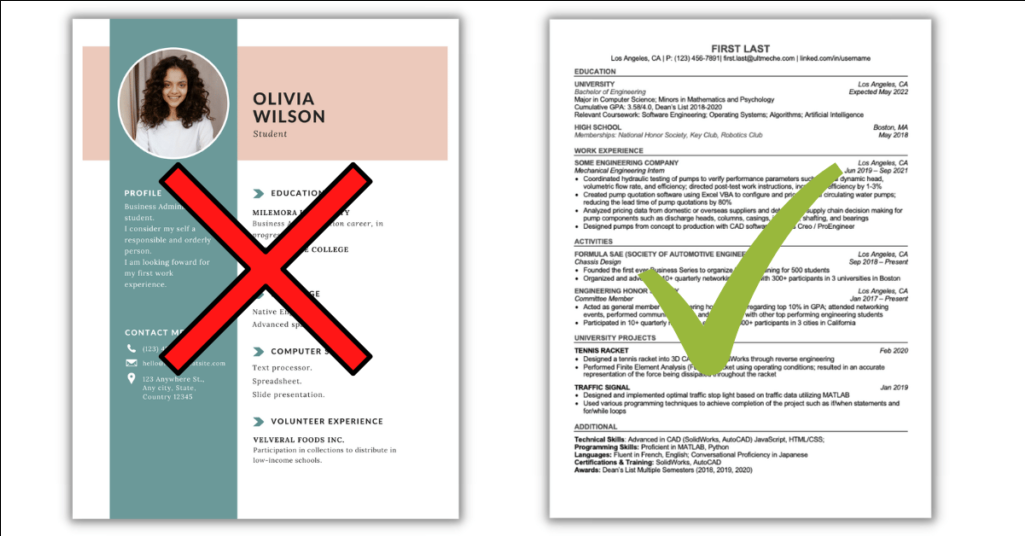
Good vs Bad Resume Practices
| Good Practice | Bad Practice |
| Clear and simple writing | Overly complex language |
| Relevant experience only | Irrelevant details |
| Tailored for the job | Same resume for all roles |
| Clean structure | Cluttered layout |
Red Flags vs. Acceptable Situations
Not everything that looks like a mistake is a problem. It may sound like a red flag but might be acceptable. The only thing that matters is how you present it.
For example:
- Taking time off to study is completely normal.
- Freelancing or side projects show you’re taking initiative.
- Changing careers is common and nothing unusual.
Employers are also humans. They understand that careers are not always linear. They have gaps, ups, and downs. When you add context, you remove doubt.
How Do Recruiters Spot Red Flags?
Recruiters are super busy and don’t have time to read your document line by line. They just glance at your resume for a few seconds and make a decision. If you understand what they look at, you can focus on it more and turn the fate of your document upside down.
Know that they scan them quickly to get a general sense.
They usually look at:
- Dates and timelines
- Job titles and progression
- Skills related to the role
- Overall structure and clarity
If something feels off or they find the biggest resume mistakes, it may form a negative impression.
How to Fix Resume Red Flags?
Most red flags can be improved by making small changes. You don’t need to start from scratch and create a whole new document. Just make sure it is clear and more focused towards you and your skills.
Once you clean up the basic red flags, move on to eliminating anything that is confusing or may raise doubts. In the end, it will become much easier to read.
Some simple ways to improve it are:
- Be honest and clear about your experience.
- Add short explanations where needed
- Focus on relevant skills and achievements
- Remove anything unnecessary
- Keep formatting simple and consistent.
- Proofread carefully before sending
Tips to Make Your Resume Stronger
Mistakes are common. Everyone makes them, and that’s completely normal. But not fixing or avoiding them is where it becomes a problem. Stay away from such mistakes and present your skills in the right way.
A few simple tips can help:
- Keep your content focused on the job you’re applying for.
- Use bullet points so it’s easier to read
- Show what you achieved, not just what you did.
- Keep your language simple and easy to understand.
- Only include things that actually add value.
Bonus Tip: Ask expert LinkedIn profile makeover services to work for your social presence as well.
Quick View: Red Flags and Fixes
| Red Flag | Why It’s a Problem | How to Fix It |
| Employment gap | Raises questions | Add a short explanation |
| Job hopping | Looks unstable | Show context or growth |
| Spelling errors | Feels careless | Proofread carefully |
| Generic resume | Feels unfocused | Tailor for each job |
| Too much info | Hard to read | Keep it relevant |
Final Checks Before You Submit
Before you share your resume around, it’s encouraged that you take a moment and find resume red flags. Always review it because a double check will only work in your favor.
Ask yourself:
- Is everything clear and easy to understand?
- Have I removed anything unnecessary?
- Does it match the job I’m applying for?
- Are there any mistakes?
FAQs
What are the biggest red flags on a resume?
Any unexplained gaps, multiple job changes, spelling mistakes, and irrelevant information are the red flags. Even if you stretch your resume to multiple pages, it’s considered negative.
Do employment gaps look bad on a resume?
Not necessarily. They’re usually fine if you try to explain them. You can clearly mention how you used that time wisely to build solid skills and learn new technology.
How do I fix red flags on my resume?
You can be honest and add explanations. By simply removing unnecessary details, you can save yourself from getting rejected.
Can a bad resume stop me from getting an interview?
Yes, even the smallest mistake can cost you a job interview. Since recruiters have many options, they may move forward with the other candidate after seeing one tiny mistake.
Wrap Up
In simple terms, your resume should be easy to read, understand, and trust. You don’t have to make it perfect. If it shows honesty and relevance, you’re good to go. By just avoiding common resume mistakes, you can impress the recruiter. In fact, many red flags aren’t a problem itself. They just need a good presentation.
Instead of trying to include everything, stay focused on what really matters.

Amanda Smith works as a professional writer at Resume Agency CA, and she shares her expertise through blog posts that contain practical tips and easy-to-understand advice about writing resumes and cover letters. She understands the challenges job seekers face and writes in a clear, friendly way that makes career advice easy to follow. Amanda shares useful tips through his blogs, which provide readers with real examples and detailed instructions to help them build effective resumes, write successful cover letters, and increase their chances of securing employment.